

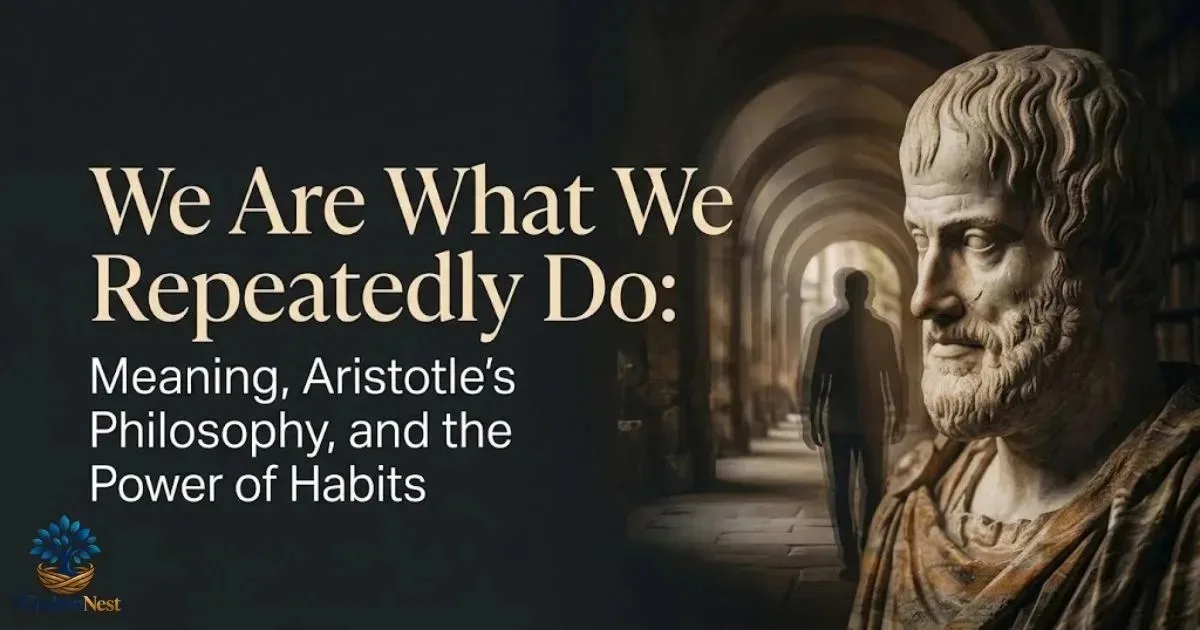
What Does “We Are What We Repeatedly Do” Really Mean?
The phrase means that our regular actions influence the kind of person we become. Character grows through choices practiced over time, not through occasional moments of good behavior.
Consider two students who want to become better writers. One writes only before major assignments. The other practices regularly, reviews mistakes, and learns from feedback. Over time, the second student is more likely to develop stronger writing skills because practice becomes part of everyday life. The same principle applies to honesty, patience, discipline, and responsibility. Keeping promises repeatedly can strengthen reliability, while regularly avoiding responsibilities can reinforce procrastination.
However, repetition alone doesn't guarantee improvement. A person can repeatedly practice an ineffective method or reinforce a destructive behavior. Progress requires thoughtful action, feedback, and a willingness to change. The central lesson is simple: your daily choices matter because they help shape your future behavior.
“We are what we repeatedly do. Excellence, then, is not an act, but a habit.”
— Commonly attributed to Aristotle, but this wording is a modern paraphrase of his ideas rather than a verified direct quotation.
Note on context: Aristotle argues that people develop virtues by practicing virtuous actions repeatedly. Just as people become skilled through practice, they build good character by consistently choosing good actions. Excellence is not achieved through one impressive moment; it grows through daily habits, deliberate choices, and persistent effort.
Key Takeaway: Your repeated actions shape your character. Consistent habits matter more than occasional achievements because they gradually influence who you become.
- Build small, positive habits and practice them consistently.
- Focus on daily actions instead of waiting for motivation.
- Choose behaviors that reflect the person you want to become.
- Replace harmful routines with healthier alternatives.
- Practice honesty, patience, discipline, and kindness in everyday situations.
- Track your progress and improve through repetition.
- Remember that lasting excellence develops through consistent effort, not isolated achievements.
Who Said “We Are What We Repeatedly Do”? The Will Durant Connection

The familiar quotation is commonly attributed to Aristotle, but its wording comes from American philosopher and historian Will Durant. In his 1926 book The Story of Philosophy, Durant summarized Aristotle's ideas about virtue, practice, and character in memorable language.
The familiar version reads:
"We are what we repeatedly do. Excellence, then, is not an act, but a habit."
Although people frequently label this an Aristotle quote, it is better understood as Durant's summary of Aristotle's philosophy rather than a verbatim statement by the ancient Greek philosopher. The distinction matters because accurate attribution helps readers separate historical evidence from modern interpretations. Durant captured a genuine idea in Aristotle's work, but he expressed it in his own words.
Aristotle's original discussion appears in his Nicomachean Ethics, particularly Book II, where he explains how people develop moral virtues through practice. His argument supports the quotation's message without establishing that he used its exact wording.
How Aristotle’s Nicomachean Ethics Explains Habit and Character
Aristotle's Nicomachean Ethics examines what it means to live well and develop a virtuous character. Rather than treating morality as a collection of rules, Aristotle explores how people's choices, dispositions, and reasoning contribute to a flourishing life.
Aristotle's Theory of Habit
In Book II, Aristotle argues that moral virtues develop through habituation. People learn to act courageously, fairly, and moderately by practicing actions associated with those qualities.
For example, someone doesn't become generous simply by understanding generosity. They develop the quality by making considerate choices and learning to respond appropriately to others' needs.
Aristotle distinguishes moral virtues from intellectual virtues. Intellectual virtues develop substantially through teaching and experience, while moral virtues develop through habitual practice. Both require time and learning.
What Is Human Flourishing?
Aristotle uses the Greek term eudaimonia to describe flourishing or living well. This idea goes beyond temporary happiness or material success. A flourishing life involves exercising human abilities well, developing virtues, and making sound decisions across different circumstances. Wealth and comfort may contribute to life, but Aristotle doesn't consider them sufficient by themselves.
His philosophy therefore gives habits a deeper purpose. The goal isn't merely to become productive. It's to become someone who consistently makes thoughtful, ethical choices.
Why Repeated Actions Shape Virtue and Personal Excellence
Aristotle's philosophy of virtue explains why individual actions matter, but it also shows why their quality matters. Repeating an action doesn't automatically make it good. The action must be appropriate to the circumstances and guided by sound judgment.
Consider courage. A courageous person doesn't rush into every dangerous situation. Instead, they learn to face reasonable fears while recognizing when caution is necessary. This is where practical wisdom, or phronesis, becomes essential. It helps people judge what a situation requires rather than follow routines blindly. The Greek word arete means virtue or excellence. In Aristotle's ethical philosophy, excellence involves performing a function well and developing the qualities needed for a good life.
A person can apply this idea in ordinary situations:
- Honesty: Tell the truth even when doing so feels uncomfortable.
- Discipline: Complete important responsibilities before seeking distractions.
- Fairness: Consider other people's interests when making decisions.
- Patience: Respond thoughtfully instead of reacting immediately.
These practices can gradually support stronger character. Still, personal excellence isn't perfection. It involves learning from mistakes, improving judgment, and choosing better actions over time.
What Aristotle Teaches About Building Good Habits
Aristotle's philosophy suggests that developing good character requires practice, patience, and thoughtful choices. You don't need to transform your entire life immediately. Begin by identifying the qualities you want to develop.
For example, if you want to become more responsible, choose one daily action that demonstrates responsibility. Finish an important task before relaxing, prepare for tomorrow's commitments, or follow through on a promise.
The goal is to make your values visible through your behavior. Over time, review whether your actions reflect the person you want to become.
Aristotle believed that good character develops through consistent practice and repeated actions. By building habits that reflect virtues such as honesty, courage, and discipline, we can gradually move toward a more meaningful life. Our guide on what Aristotle teaches about building good habits explains how everyday choices shape character and contribute to lasting personal growth.
How to Turn Daily Routines Into Lasting Positive Change
Effective habit-building starts with actions you can repeat realistically. Choose a specific behavior, connect it to an existing routine, and make it easy to begin. A student who wants to read more might read a few pages after breakfast. Someone who wants to improve professionally might spend 15 minutes practicing a relevant skill each evening.
Track your progress without demanding perfection. If you miss a day, identify what prevented you from following through and adjust your plan. The power of repetition comes from continued practice combined with learning. Repeating an action without reviewing its effectiveness may reinforce mistakes instead of producing improvement.
How Consistency and Discipline Help Develop Virtuous Character
Consistency helps turn intentions into observable behavior, while discipline helps you act when motivation is low. Together, they support personal growth through regular practice.
However, Aristotle's approach goes beyond following a schedule. He emphasizes choosing appropriate actions through reason and practical wisdom. Being disciplined doesn't mean working constantly or refusing every pleasure. It means making balanced choices that support a good life. For instance, a responsible employee meets commitments but also recognizes when rest or asking for help is necessary. Excellence involves sound judgment, not simply doing more.
How to Break Bad Habits and Replace Negative Patterns
Destructive habits can become familiar responses to boredom, stress, or particular environments. Changing them begins with identifying the situations that trigger them. If you frequently procrastinate while using your phone, place it outside your workspace and begin with one manageable task. If you react impatiently during disagreements, practice pausing before responding.
Focus on replacing unwanted behaviors with better alternatives rather than relying on willpower alone. Review your progress and adjust your approach when necessary. One mistake doesn't define your character. What matters is how you respond, learn, and practice better choices afterward.
How Stoicism Connects With Aristotle’s Philosophy of Habit
Aristotle and the Stoics both emphasize developing character through deliberate practice, but their philosophical systems aren't identical. Aristotle connects virtue with human flourishing and practical wisdom. Stoic philosophers, including Epictetus and Marcus Aurelius, emphasize living according to reason, practicing virtue, and responding wisely to circumstances beyond your control.
Both traditions encourage examining your choices instead of relying entirely on intentions. A practical lesson they share is to practice patience during frustration, fairness during disagreements, and self-control when facing temptation. The concept of arete, or excellence, also appears in Stoic philosophy. It refers broadly to virtue or excellence, not a special Stoic habit technique.
The principle that repeated actions shape our character also applies to love and relationships. Small, consistent choices "such as showing kindness, listening carefully, and practicing patience" can influence how we build and maintain meaningful connections. If you want to explore the deeper philosophy of love, emotional intimacy, and long-term relationships, read our guide to [Alain de Botton’s reading list: 10 best books on love and relationships].
How to Apply This in Daily Life
- 1Reflect on this Stoic exercise each morning before starting your tasks.
- 2Apply the dichotomy of control when navigating unexpected setbacks or decisions.
- 3Journal your reflections in the evening to reinforce clarity and discipline.
Frequently Asked Questions
Concluding Thoughts
This principle captures an enduring lesson about character: our choices matter, especially when we make them consistently. Aristotle's philosophy explains why virtue develops through practice and why living well requires more than knowledge or good intentions. His ideas encourage us to combine repeated actions with reason, reflection, and sound judgment.
You don't need to change everything at once. Choose one quality you want to develop, identify a practical action that expresses it, and begin practicing it consistently. Over time, those choices can help you build better habits and move toward a more thoughtful, virtuous life.

Hi, I’m Mehrab Khursheed, a professional Content Writer and Digital Marketing Expert with 4 years of experience in the digital industry. I studied at The Islamia University of Bahawalpur. I specialize in creating engaging, actionable content on practical Stoicism, mental resilience, personal growth, and philosophical frameworks for modern life.